
The Hilo, Part 4 of an Ongoing Series
By Rosalinda Cruz, Founder of The Asor Collective
When I started this series, I thought it would be four parts. I was wrong, in the best possible way.
The more I have dug into this history, the more I have found that it refuses to be contained. Every thread I pull reveals another thread underneath it. So what began as a four-part series has grown into something longer, deeper, and more personal. Hilo, the Spanish word for thread, and it will keep going as long as there is more to find.
Before we go further I want to say something about how I am approaching this work, because I think it matters. I am not a historian. I am not a researcher, a scientist, or an academic. I am a person who started digging into her own ancestry after losing her father, and found that the history of Puerto Rican and Caribbean textile tradition was woven into her family’s story in ways she never knew. That is my methodology is listed below which was guided by curiosity and personal connection. A deep respect for the scholars and cultural preservationists who have been doing this work long before me, whose research I lean on and try to credit carefully.
I am also aware that there is so much more to explore than any one person can cover. So as we move through each part of Hilo, I want to hear from you. What topics have resonated most? What would you like us to go deeper on? What have we not yet covered that you think belongs in this series? This is not just my research. It is a conversation, and I want you in it.
Now. This installment belongs to the workers.
Operation Bootstrap and the Migration North
In the late 1940s and into the 1950s, the U.S. government restructured Puerto Rico’s economy through a program called Operation Bootstrap, an industrialization push that moved the island away from agricultural production and toward factory labor. The consequences were enormous and complex, and they are still being reckoned with today.
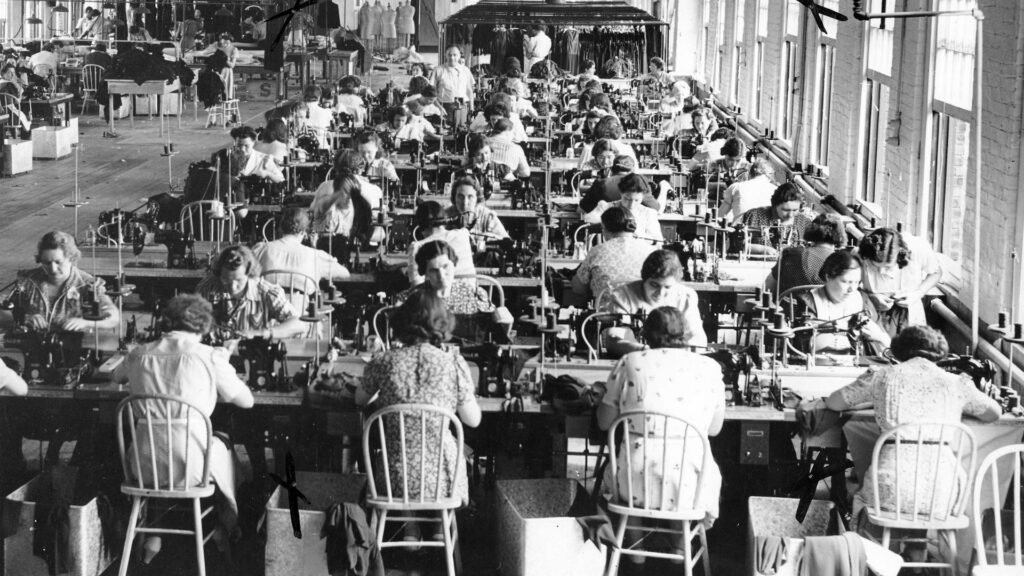
One consequence was migration. Tens of thousands of Puerto Rican workers, overwhelmingly women, left the island for New York City and other cities across the Northeast. Many of them went directly into the garment and textile industry, taking their place in one of the most labor-intensive, underpaid, and underprotected sectors of the American economy.
What happened next is a chapter of American labor history that rarely gets told with the credit it deserves.
26,000 Members and a Strike That Changed Things
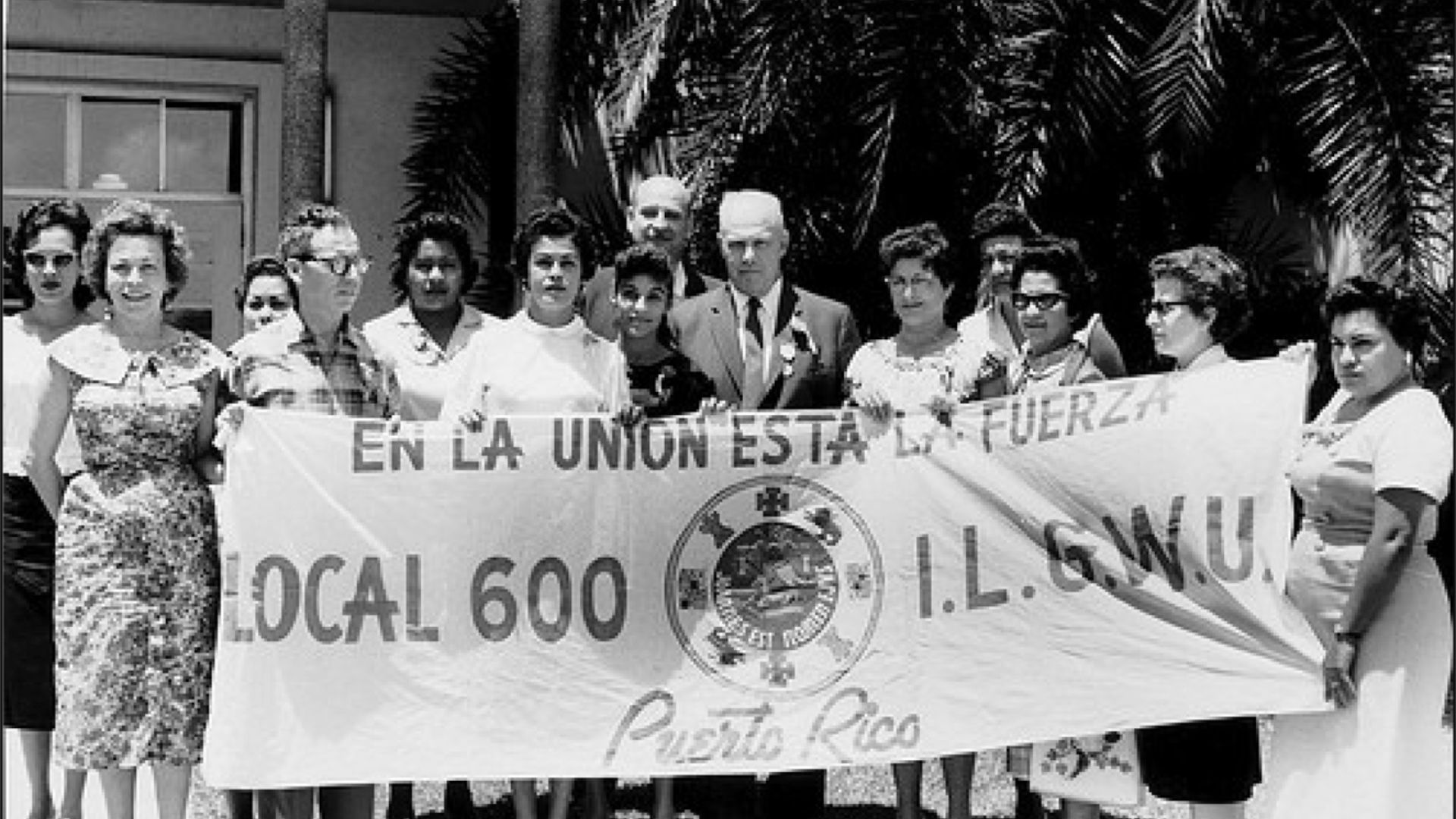
The International Ladies’ Garment Workers’ Union, known as the ILGWU, was founded in New York in 1900. For its first half-century it was shaped primarily by Jewish and Italian immigrant women. By the mid-20th century, according to research from the Centro de Estudios Puertorriqueños at Hunter College, CUNY, Puerto Rican women were transforming its membership and its identity.
By the early 1950s, the ILGWU had more than 26,000 Puerto Rican and Spanish-speaking members across its New York locals. These were not passive participants. They pushed the union to publish in Spanish. They organized Spanish-language sections and programs. They built community infrastructure, ESL classes, childcare support, cultural programming, inside a labor organization that had not been designed with them in mind.
And in 1958, they struck.
A general dressmakers’ strike gathered over a hundred thousand women. Puerto Rican members were central to it. They walked picket lines, won significant wage gains, and demonstrated in concrete terms what their power inside the movement actually looked like. As the labor archives at Hunter College document, Latina members continued to grow in visibility and leadership through the 1960s, 70s, and 80s, reshaping the ILGWU’s identity until it merged into UNITE in 1995.
In 1983, Local 23-25 launched the ILGWU Immigration Project, offering legal services to union members. It was the first program of its kind in U.S. labor history. Puerto Rican and Latina workers built that too.
They Weren’t Just Workers. They Were Architects.
This is the part that tends to get lost.
The narrative of Puerto Rican garment workers is usually told as a story of labor and struggle, which it was. But it is also a story of institution-building. Of people who arrived in a new place, entered an industry that was not designed to protect them, found a union that was not fully prepared to represent them, and proceeded to reshape both.
They demanded that meetings happen in their language. They organized within the union while also organizing against it when it fell short. They built solidarity not just with each other but with Black workers, with other immigrant communities, with everyone the American labor movement had historically left out.
That is not just labor history. That is the history of how durable institutions get built. And it was done by women who had come from an island with centuries of textile knowledge in their hands and survival knowledge in their blood.
The Arc
When I look at the full span of this series, what I see are not separate stories. I see one continuous act of building.
The Taíno cultivated cotton and developed a material culture of extraordinary sophistication. Fermín Tangüis took that Puerto Rican relationship with fiber and applied it through science and patience to rescue an entire economy. The women of Moca took the craft knowledge passed through their families and built an industry from their homes, then organized to keep it from disappearing. The garment workers of New York took the skills and the resilience that history had given them and used both to reshape an institution that had excluded them.
Each chapter connects to the next. Each generation built on what the one before it left.
That is what the sustainable fashion movement is asking brands to do right now: understand the full chain of your materials, credit the knowledge holders, build for the long term, stop treating history as a footnote. The people in this series were doing exactly that. Centuries before anyone called it sustainability.
Why This Matters for the Work I Do
I came back to this history through grief, through the stillness that followed losing my dad and the questions that came in the quiet. I didn’t set out to find a framework for my work. I found my family.
But it became a framework anyway, because it had to. You cannot spend this much time with this history and then go back to talking about sustainable fashion as if it were invented last decade. The research I am doing, the conversations I am building at The Asor Collective: these are acts of archiving. Of torchbearing. Of insisting that the people who built this knowledge get named in the story of what was built.
I am proud to be a Borinqueña. Proud of the Taíno, African, and European ancestry that lives in my family’s faces. Proud of the women who wove, the men who planted, the workers who organized.
The thread was always there. It just needed someone to follow it.
Hilo is an ongoing series exploring the Puerto Rican and Caribbean textile legacy that sustainable fashion keeps leaving out of its story. If this work resonates, the best way to stay close to it is through the newsletter.
And I want to hear from you. Which parts of this history have landed most? What would you like us to go deeper on? What have we not yet covered that you think belongs in this series? Reply to this email or leave a comment on one of our blog posts on social media. This research grows when we do it together.
Rosalinda Cruz is the founder of The Asor Collective, a fashion advisory and education practice with a niche in sustainability based in North Carolina.
A Note on Methodology:
The research informing this series moves through several layers of inquiry. It begins with cultural immersion, coursework, and the kind of observational knowing that comes from living inside a community and its history. It expands into archival aggregation, gathering documented sources, oral histories, and family narratives, with attention to the distinction between primary and secondary sources. It deepens through journalistic-level inquiry, including structured interviews with community practitioners, elders, scholars, and cultural workers, conducted in part through The Common Thread, my monthly long-form interview series. Where available, findings are grounded in peer-reviewed scholarship and institutionally documented sources, which are cited explicitly. Ancestral and community knowing is treated as evidence, not anecdote. It is sourced, named where possible, and held with the same care as any other form of documentation. This series does not claim to be academic research. It claims to be honest, sourced, and accountable to the communities it is about.
Sources referenced:
- Centro de Estudios Puertorriqueños, Hunter College CUNY, Puerto Rican Labor digital archive
- Historias NY Chronicles, “International Ladies’ Garment Workers Union (ILGWU)”
- Rutgers Latino Studies Research Initiative, “Puerto Rican New Yorkers: The Unions, 1940s–1960s”